

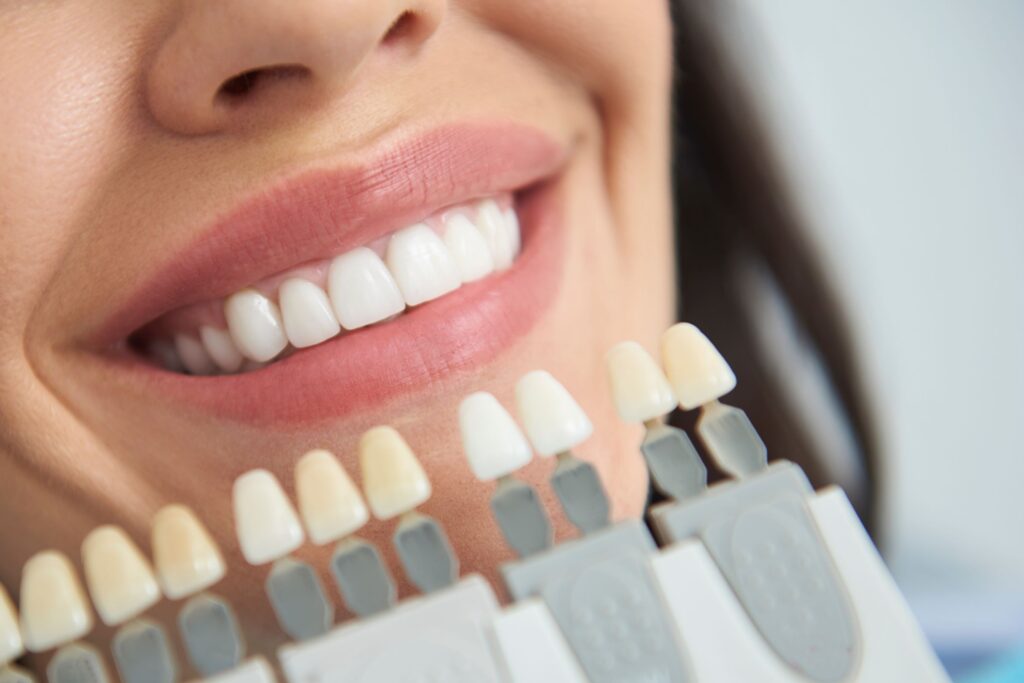
One of the first things others notice about you is the quality of your smile, but if your teeth are tinted more gray or blue than pearly white, you might fear being judged for your appearance. You might even worry about what caused your dental discoloration and whether it can be treated.
Thankfully, your dentist can examine your condition to help determine and address the cause of your tinted teeth. Continue reading to learn about 3 potential reasons it developed and how your provider can help!
Cause #1: Medications
Would you be surprised to learn that certain medications can affect how your enamel develops? For example, according to the Journal of International Oral Health, exposure to an infection-fighting antibiotic, tetracycline, can affect children’s dental development. Not only can this impact small children, but it can even happen to babies in the womb through their mother.
This can cause blue-gray or yellow-brown splotches or horizontal stripes that don’t usually respond to regular brushing. However, teeth whitening treatments can often help provide a more consistent hue. Your dentist can assess your condition and recommend an appropriate service to upgrade your grin.
Cause #2: Physical Trauma
You might think of your teeth as hard blocks of enamel existing in your jawbone, but the truth is that the hard protective outer layers shield soft pulp inside. Your pearly whites contain nerves and blood vessels, which, if damaged, can become discolored. Anything that cuts off the blood flow to your tooth can potentially leave it looking darker than its neighbors.
Whitening is unlikely to improve your condition, but your dentist can provide other cosmetic services to enhance your smile. For example, they can place veneers or a dental crown to mask imperfections, though depending on the condition of your tooth, it might require extraction and replacement.
Cause #3: Genetics
You likely already know there are certain physical traits that you inherit from your parents, like the shade of your hair or the color of your irises. But many people don’t realize their genes also carry information that affects the tone of their teeth.
For example, certain genetic disorders, such as dentinogenesis imperfecta, weaken your enamel and can cause your teeth to appear darker, translucent, or brittle, and makes them more fragile and prone to damage. Your dentist can help diagnose and treat more complex conditions based on your unique needs.
If you’re still unsure of the cause behind your dental discoloration, you can learn more by consulting your dentist directly!
Meet the Author
Dr. David Fisher has over 20 years of experience helping people build and maintain beautiful, healthy teeth and gums. He earned his dental doctorate from the University of North Carolina at Chapel Hill, and has completed rotations in oral surgery, special care, and geriatric dentistry that have served him well throughout his career. Today, he offers a complete menu of services, including cosmetic procedures, to meet all your needs conveniently under one roof. You can request an appointment on the website or by calling (336) 288-1242.