

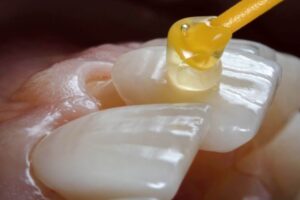
Although your veneers were designed to withstand a full diet for 15+ years, sometimes accidents do happen, and they may fall off your teeth before they’re ready to be replaced. Here’s what you should do if it does, and how you can reduce the risk of it occurring in the first place!
What to Do if You Lose a Veneer
Although the dental cement used to hold your veneers in place is designed to withstand enjoying a full diet for many years, on rare occasions restorations still may fall off. If this happens, there’s no need to panic. Simply locate the veneer and remove it from your mouth. If it has broken, carefully collect all the pieces you can find, and then rinse your mouth well to clear away any fragments. Be sure to save it to take with you to the dentist, especially if it’s still whole, as it may be able to be reattached. If it has broken, however, it will need to be replaced.
Next, call your dentist and explain the situation. While it may not seem like that big of a deal, because your dentist removed enamel prior to attaching it, by leaving your tooth uncovered it will be vulnerable to plaque, bacteria, food debris, and sensitivity.
To protect your tooth until your dental appointment, you can cover it with dental wax (available in the oral hygiene aisle at department stores and pharmacies). Never attempt to reattach your veneer yourself with household products, as they can damage your tooth and the restoration, and can make you very sick!
Can My Veneer Be Saved?
Whether a veneer can be salvaged will depend on the condition its in when it falls off. If it is still intact, there’s a good chance it can be put back; however, if it is broken, or if your tooth needs a repair, too, you may need to replace it.
How to Maintain Your Veneers
Although it is rare to lose a veneer after placement, the best way to avoid this is to take excellent care of your smile. Here are some best practices to ensure your restorations last as long as possible:
- Always brush twice a day with a soft-bristled toothbrush and use non-abrasive gel toothpaste. Never use whitening pastes or those that contain peroxide.
- Do not use abrasive toothpaste or toothpaste that contains peroxide.
- Floss daily.
- Visit your dentist every six months for your regular checkups and cleanings.
- Avoid eating foods that are too hard or crunchy, such as ice cubes, hard candies, or crusty breads.
- Don’t use your teeth as tools.
- If you grind your teeth, speak to your dentist about having a nightguard made to protect them (and your veneers) from damage while you sleep.
Remember, your veneers were designed to deliver a flawless, beautiful smile for decades, but accidents can happen to even the most well-maintained mouth. Thus, if your veneer falls off, don’t panic, but don’t wait to get help either – instead, call your dentist as soon as possible to get your gorgeous, glowing grin back in place!
About Dr. Fisher
Dr. David Fisher earned his undergraduate and dental degrees at the University of North Carolina at Chapel Hill. Today, he stays current with his dental knowledge by attending regular continuing education courses in a variety of topics. If you’d like to improve your gorgeous grin with a solution like veneers that checks all the boxes, schedule a consultation for cosmetic dentistry by visiting our website or calling 336-288-1242.